By Brian Carney, WIN Interactive
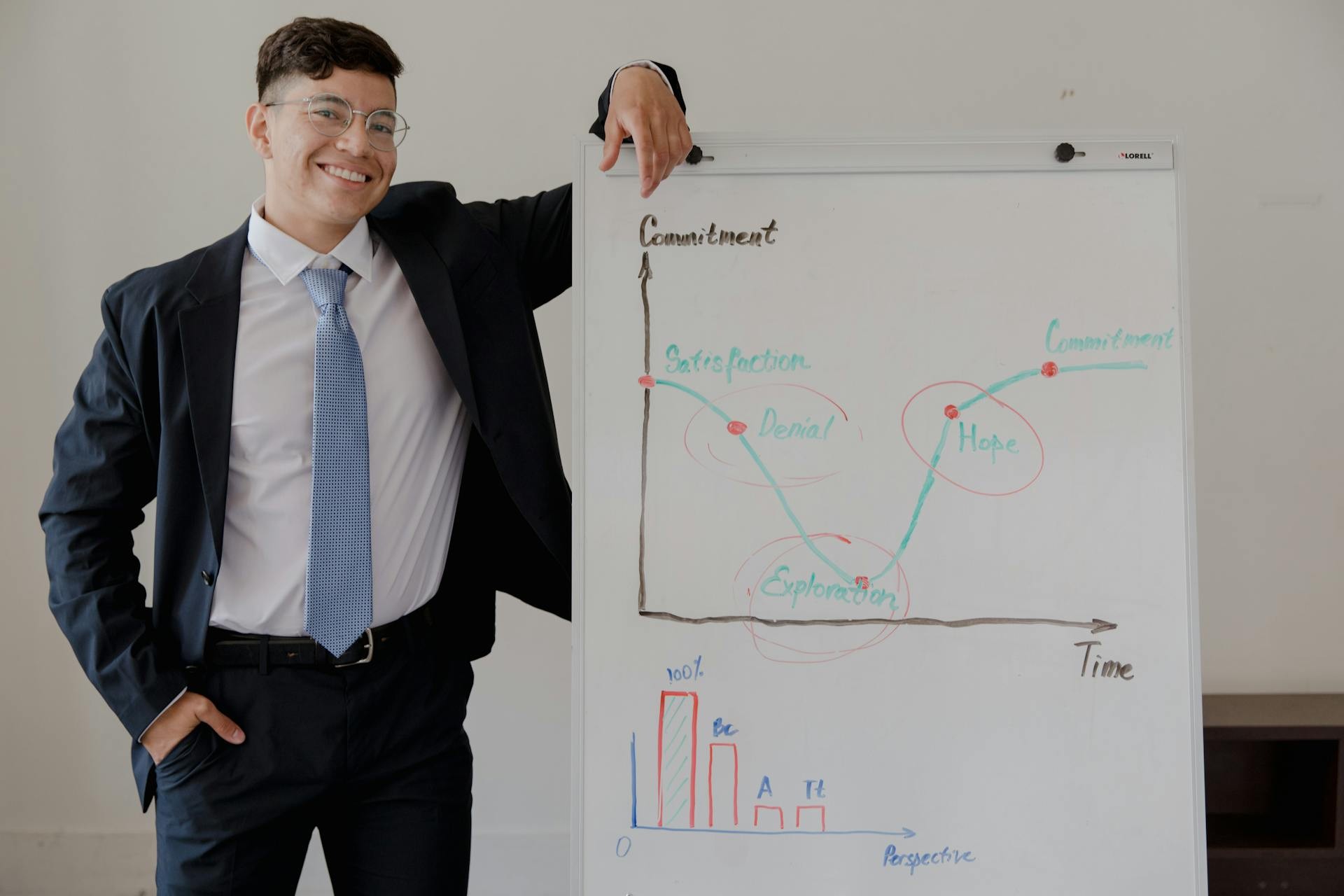
Trial lawyers enter the courtroom with a blind spot. They are eager for battle and they know their case inside and out. Contrast that with the jurors. They are probably becoming aware of the case for the first time. Most of them would rather not be there, and they are not looking forward to what is for the most part a monotonous, confusing, and forgettable routine of witnesses testifying one after the other. Trial lawyers’ excitement and deep familiarity with the facts and law are precisely what makes it difficult for them to empathize with what jurors are experiencing — and, more importantly, to recognize how much jurors don’t yet know.
Many practiced trial lawyers appreciate that visual aids can help them bridge this gap in the courtroom. What many still fail to appreciate is how much visual thinking and the creation of visual aids can help them to understand and communicate their evidence every step of the way – starting long before trial. This article will outline the role of visuals throughout the trial preparation process, with specific examples of each function visual thinking and visual aids can perform.
Consider the mantra: Prepare yourself visually before you prepare anyone else.
Lawyers should begin by creating visuals that educate themselves and their team on the details of their case, helping them internalize and refine their grasp of every aspect of it – even if the visual aids used to perform this educational function never see the light of day in the courtroom. Working up these visuals will help the trial lawyer better comprehend and remember the details of the case and know where to look for evidence that might be missing from the story he or she will eventually want to tell. It will also expose weaknesses in the evidence, so that the lawyer is not caught unprepared while live in front of the jury. For the same reasons, working up visuals can help lawyers master the material in other contexts, including mock trials, internal client presentations, mediation, and arbitration.
A good example of how visual thinking can help throughout the case is my first attempt at using interactive multimedia at trial. I created a timeline using Macromedia Director, a cutting-edge visualization tool at the time (circa 1999). I developed the interactive timeline for a drug case I prosecuted as an assistant district attorney in Boston. It was a very basic timeline showing details involved in four undercover drug buys that the Boston Police conducted on a local gang member. When I tried to use the timeline in closing arguments, the judge conducted a hearing and decided it was unnecessary. I wasn’t allowed to use it. While you might think that the time spent thinking about it and actually creating the visual aid was wasted, the exact opposite is true. Throughout my closing argument, I mentally referenced the details from that timeline, making for a much more organized and effective closing. The lesson I learned was that visuals built during trial preparation can be useful even if the jury never got a chance to see them.
Visuals created early in the litigation process can substantially assist the trial lawyer in developing more effective questions during discovery. Visuals prepared before trial allow a well-prepared trial lawyer to see the evidence from a different perspective and to craft more precisely worded interrogatories and deposition questions. Two examples come to mind. The first is a slip-and-fall case in which my team developed a 3D model of the outdoor stairs to a residential home. During the witness’s deposition, the trial lawyer used color printouts of those custom-designed 3D images (without showing them to the witness) as he asked questions. Referring to each image helped him elicit more precise answers from the witness.
In a second case, I developed a five-hour synchronized video composed of footage from multiple surveillance and handheld cameras recording simultaneously. We used various zoom levels on certain camera angles and added on-screen clocks, along with textual and graphical annotations, to highlight specific events occurring over that five-hour period. With the resulting interactive timeline displaying this extensive detail, the trial lawyer had at his fingertips every important fact and precise time at the click of a mouse for use in each deposition. The lawyer conducted nine witness depositions. In each, he began without referring to the synchronized timeline on screen, but whenever a witness lied or misstated their involvement, eventually, after the witness had sufficiently locked himself into an inaccurate factual recitation, the lawyer displayed the relevant event on-screen and forced the witness either to admit the truth or to stop lying about the facts. Having this tool made the depositions efficient and effective in a way that no alternate approach could have come close to matching.
Next, visuals can help lawyers prepare their witnesses to testify. Lawyers can develop custom visual aids specifically designed for each witness to get them to understand the issues central to their testimony and to think and speak visually to the jury. Then, these same visuals, revised as needed, can be used at the trial itself to guide the witnesses’ testimony. By creating visual cues for the witness, custom visual aids enable witnesses to retrieve their testimony from their memory of the visual, keeping them on track and focused on what they most need to convey. Of course, those visuals will also themselves help jurors understand the substance of the testimony, especially if it is complicated or technical (e.g., Feigenson & Spiesel, 2009).
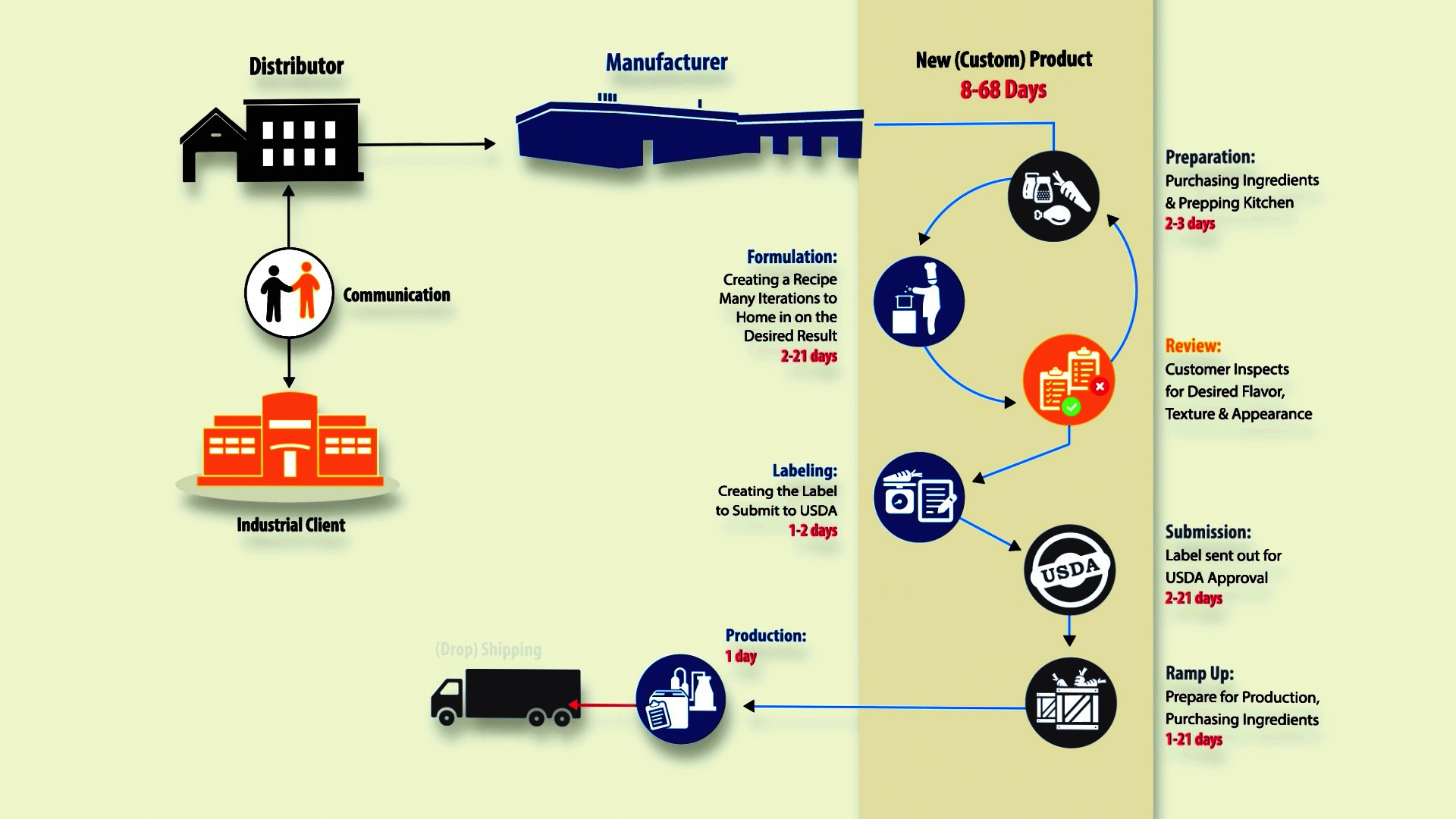
A good example of the benefits of using visualization to prepare witnesses is a case on which I served as a consultant. The witness—a very articulate but long-winded salesman who owned a soup-base distributorship—had maintained a decades-long, handshake-based relationship with the owners of a soup-base manufacturing company. In preparing the witness for trial, it became clear that keeping his emotions in check on the witness stand would be a significant challenge, given the sense of betrayal he felt when the children of the original owners, now the owners themselves, breached that longstanding business relationship. His focus needed to be on the legally relevant issues, not on his emotional response to their disloyalty.
To address this, we created a process graphic to guide his testimony. We instructed him to answer every question—whether on direct or cross-examination—using only the details shown on that graphic. His orders were simple: “If it is not on the graphic, do not talk about it.” This approach worked exceptionally well. The witness testified flawlessly, drawing each legally relevant answer directly from the visual aid, which prevented his emotions from overshadowing the critical points he needed to convey. As a result, he proved to be an excellent witness and won his legal dispute.
Finally, looking ahead to the trial: All lawyers know (or should know) that jurors today want and expect to take in information visually. They intuitively process and trust visual displays—charts, timelines, and videos. This habituation stems from a visual culture saturated with images that shape how they process and learn. This is especially true of younger, Gen Z jurors (e.g., Huss, 2023). “For the trial lawyer as well as the judge, effective communication with Gen Z jurors will entail catering to their visual learning styles and their aversion to traditional lecture” (Bonner, 2023, p. 61). Given the need to simplify things for jurors, to educate them, and to attract and hold their attention, the case narrative should be presented visually throughout the entire trial. Visuals should be employed in opening statement, on direct examination, during cross-examination, and in closing arguments. Using visual aids and not just words throughout the trial allows the lawyer to communicate and repeatedly emphasize a consistent story. Before trial, thinking in terms of what those visuals might look like can help the lawyer imagine a more effective theory of the case itself. Additionally, having spent time visualizing the facts and issues in their own case will help the trial lawyer better analyze and deconstruct any false aspects of their opponent’s visual displays.
An example of preparing visuals without fully knowing exactly how they would be helpful later is a homicide case on which I consulted for the prosecution. Because the scene had three-dimensional complexity, we built a 3D model and created animations to show where blood spatter was found throughout the victim’s bathroom and bedroom. Unbeknownst to us, the defense had produced its own 3D model, which, however, contained several inaccuracies. During cross-examination of the defense’s medical examiner, the prosecutor pointed out each minor discrepancy and ultimately exposed two important flaws in the defense’s visualization. First, it was impossible for blood spatter on the bottom of a Poland Springs water bottle—found on the bedside table—to have arrived there under the defense’s theory. Second, the angle of impact in the defendant’s 3D model was actually rotated 180 degrees opposite the defense medical examiner’s explanation of the skull-crushing injury to the right side of the victim’s head. This was devastating to the defense. When asked to explain these discrepancies, the medical examiner surprisingly admitted he had not intended to be precisely accurate.

As described above, visuals serve as a reliable anchor for clarifying the truth. Once the facts are arranged into a coherent visual framework, it becomes much easier for the trial lawyer to assess testimony against those established truths and to present that comparison clearly to the jury. Trial lawyers are always taught to work backwards from their closing argument to the preparation of the case; thinking of that closing in visual terms can suggest a more powerful theme and more engaging storyline than words alone could. Then, at trial, using a suitably revised version of that same visual storyline can help to bridge that gap between the lawyer who already knows everything about his or her case and the jurors who don’t, making those jurors eager and able to learn the story the lawyer wants to tell.
Modern litigation frequently presents complex issues, intricate fact patterns, and unfamiliar legal concepts, making the juror’s role especially demanding. Because law schools generally have failed to equip lawyers with strong visual communication skills, trial attorneys must develop visual literacy and the ability to convey information graphically. By employing visuals throughout the litigation process, trial lawyers and witnesses can better recall and understand critical facts and arguments, enabling them to present their case more convincingly to the jury.
References
Bonner, K. (2023). What Do Judges Need to Know About Gen Z? Judicature, 106(3), 56-66.
Feigenson, N., & Spiesel, C. (2009). Law on Display: The Digital Transformation of Legal Persuasion and Judgment. New York: NYU Press.
Huss, J. (2023). Gen Z Students Are Filling Our Online Classrooms: Do Our Teaching Methods Need a Reboot? InSight: A Journal of Scholarly Teaching, 18, 101-112.